It’s been a full and bananas-fun-fire-horsey summer with my trip to Shambhala, a quick gig of cat-sitting, and a recent weekend in Calgary at When Words Collide with a bunch of other Canadian book coaches...and now I’m delighted to invite you to gather with me in person this fall. We gonna drop it down a notch, go within, get quiet, and spend some holy time with our books.
This September, I’m co-facilitating the Trillium Writing Retreat, a week-long writing immersion for women / female-identifying people in Muskoka cottage country (near Huntsville, Ontario). The retreats are super small by design. Together, we’ll be deepening our creative practice, connecting with our physical senses, and strengthening our writing through coaching and direct instruction.
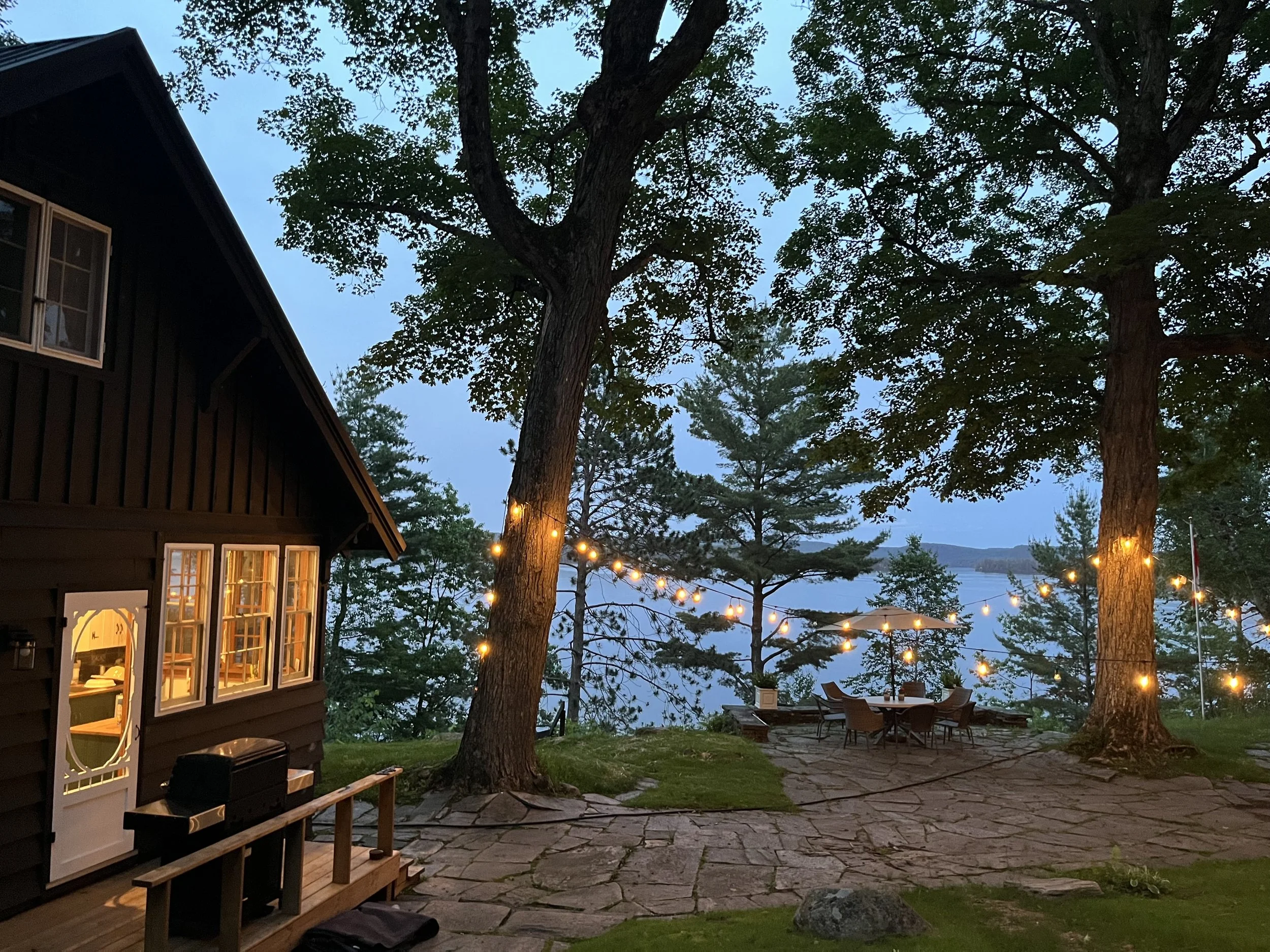
night falling on Pen Lake
Morning workshops. Afternoon writing time, or 1:1 coaching. Or wandering in the trees, grounding in the sauna, or swimming off the dock (also very grounding).
This lovely retreat is for writers of memoir, nonfiction and creative nonfiction. It’s the brainchild of Jennifer Wilson, author, memoirist, MFA grad, leadership coach and former CEO of the Canada Homestay Network. (What can I say? She’s a Manifesting Generator. Freaking productivity goblins.)
I’m thrilled that Jen has invited me to assist with facilitating this weeklong event. And because we’re full of energy and excitement about gathering writers for a beautiful week of inspiration, we’ve added another weeklong retreat and two shorter weekend retreats!
Jen and I sat down this morning to talk about the power of an inspiring natural setting for opening to creativity, the importance of personal writing, and some details about the property and retreat experience. You can listen to our fun conversation here and learn more about what we’re up to. This is just the start of something awesome!
Our gathering takes place at a stunning Muskoka cottage and guest house on a private 2.5-acre property tucked into the forests of Ontario lake country. The cottage is cozy as a cottage should be, yet it’s filled with natural light and surrounded by sweeping views of Pen Lake. Yep, there’s a dock, a canoe 🛶, and MUSKOKA CHAIRS!!
and a sauna 🧖♀️ do not forget the sauna 🎶 would you like to see the sauna?
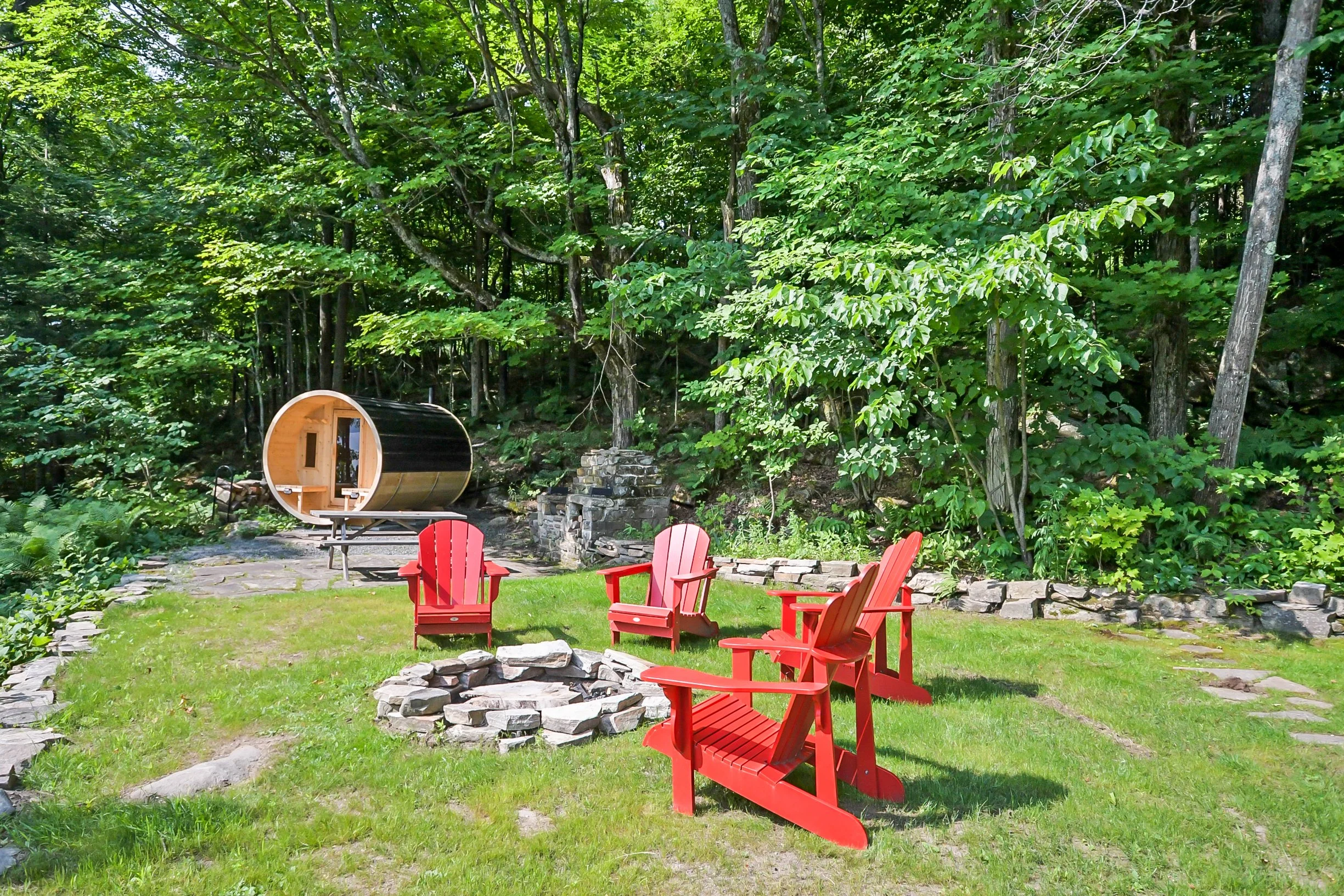
Race you!
Over four days, we’ll write, reflect, connect, share delicious catered meals together, and dabble in grounding and breathwork. I’m even thinking about offering Human Design readings for those who are interested, maybe on one of our afternoons or evenings? I’ve found Human Design to be incredibly helpful in understanding my own energy patterns, strengths, interests and work rhythms—all of which are important in my life as a writer.
Trillium (or Fern) is a chance to step away from the demands of everyday life and into a space wholly devoted to the experience of writing the book that you’ve been holding in your heart. What makes this retreat different from most is our year-long accountability container that follows the retreat, to help our writers keep the momentum going.
Jen and I talked at more length here on YouTube. (I’ve pasted the transcript for that below so the bots can pick it up.)
Details about all of our fun plans at RowlandCottage.com. I really hope you come! I would love to write with the people who visit my website and read my blog.
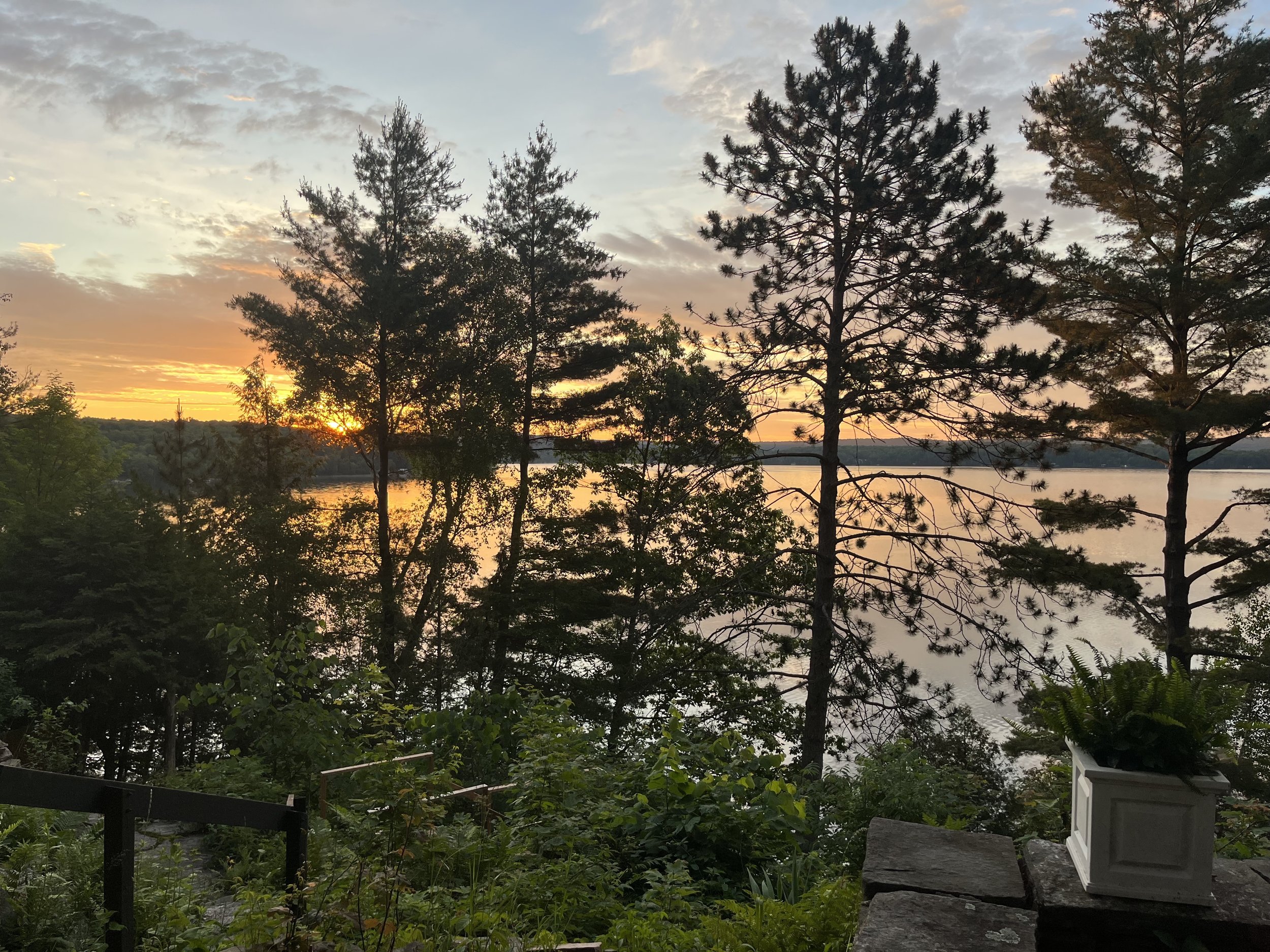
Muskoka sunset
Transcript follows
SUMMARY KEYWORDS
Memoir, Writing retreat, Creative process, Narrative arc, Story structure, Personal narrative, Workshop, Accountability, Nature, Community, Craft books, Nonfiction, Muskoka, Retreats, Writing
SPEAKERS
Jennifer Wilson, Alex van Tol
Alex van Tol 00:03
Morning, Jen.
Jennifer Wilson 00:04
Good morning, Alex.
Alex van Tol 00:06
I'm so excited to be here. I'm just going to do a quick introduction of you, and then I want to hear about where you are sitting because it's looking summery and gorgeous over there. So yeah, and this is Jen Wilson, who is a memoirist currently writing a memoir. You are an MFA grad. You are a mother. You are working your way out of running a family business, which you'd been running for quite a number of years, and you are an author. You have a nonfiction book that's connected to your to your work in homestay, and yeah, you're on summer vacation out east, and I want to talk about the out east because this is super relevant for why we're actually here. So, where are you right now?
Jennifer Wilson 00:56
Right now, I'm sitting in our brand-new boat house at our family cottage in Muskoka, Ontario. So, it's a couple hours north of Toronto. So, you can see the lake behind me. We're on a peninsula lake, which is near Huntsville, and our family has been here on this land since 1924. So over 100 years.
Alex van Tol 01:16
Wow! I didn't know that piece.
Jennifer Wilson 01:19
Yeah. Awesome. Yeah, it's great. My great grandfather first came here as a tourist in the early 1900s, sort of in his midlife, and fell in love with a resort that's right next door to us, and eventually decided to buy land and build his own cottage. And at the time, the only way you could get here was by train and steamship, so they would come up for the whole summer and just like with their steam trunks and spend all of July and August here. Nowadays, you can of course drive, but it's quite-it was quite an adventurous spirit back then to do that.
Alex van Tol 01:56
I love that you've had that cottage in your family for so long, and so this where you are right now, you're in the boat house of your family cottage.
Jennifer Wilson 02:05
Yeah,
Alex van Tol 02:05
And then there's another cottage nearby. That's where you are running retreats these days. So, talk a bit about that.
Jennifer Wilson 02:13
Yeah. So, our family is growing and expanding in this sort of next generation, and we over the years, you know, we were we've sort of outgrown the space that we have. We used to use the resort to kind of for overflow when we were all here together. But this property nearby, just a couple doors down, came on the market last year, and we jumped at the opportunity to sort of expand our presence here because it's a, it just sort of solved a lot of problems for us as a family, and it's a gorgeous property. It's about two and a half acres, high bank, 1940s original cottage. And what's really cool about it is the family that built it and lived there or owned it for 85 years were friends of my great grandparents and grandparents, so there's a really strong family connection here. So we're really excited about it. Yeah, and now of course it's this beautiful space, and we wanted to share it with other people. And I've been wanting to launch a writing retreat, and when we decided to buy it as a family, it was the first thing I thought of was like, this is the place where we can do the retreat.
Alex van Tol 03:22
Totally. And yesterday you went through the actual building and you did a little tour…and I just want to say where people can find that. It’s on my Instagram, which is @alexandravantol. And what's your Instagram handle, Jen?
Jennifer Wilson 03:39
My handle is @JenniferRobinWilson. So Jennifer Wilson is a really common name. So you have to add the Robin. That's my middle name in the middle, so you can find me more easily.
Alex van Tol 03:48
Okay. So at Jennifer Robin Wilson, just as simple as it sounds on Instagram, go find that. Go with Jen on her house tour because it's so good. It's so…and I can't wait to be there. I have not been there, and I'm excited that I get to go there with you in September and like get into memoir with people. So, let's talk about that. Where do I want to start? Well, I want to start with the importance of that kind of personal introspective writing. You are writing in memoirs, so let's dig around a little bit in there and tell me, like, why is this kind of writing important to you?
Jennifer Wilson 04:30
I think it's important for a few reasons, and they sort of start small and then get big. So, and I think this is true of all personal narrative: is that the I think most people, the first reason we do it, and this includes journaling, is to help us process things that have happened to us. That's why I journal is, and I don't know what's what I'm going to write until it comes out of the pen or the keyboard. You know, so that's the first thing, and the kind of compelling. Inciting event, I guess, that has inspired me to write the memoir I'm working on now is this what I sort of alluded to earlier. This conflict around how we be here as a growing family. We decided we needed to make some renovations to the cottage, the 100-year-old cottage that was literally disinterested. around us, and that caused a lot of controversy because there's a lot of very strong feelings about the history here. What does it mean to have to leave a legacy? What can we change? What stays the same? You know, it really brought up a lot of questions for me around why we become so attached to things, to places, to buildings, you know, and there's definitely a lot to unpack around that. So, part of my process about writing is to kind of try to make sense of that for myself personally, but then you began to when you sort of expand that from that very kind of small personal impact, it becomes very clear that these are issues that a lot of people grapple with, and you know you and there's layers to that too. Like there's lots of families with cottages that are trying to deal with you know intergenerational transfer of these recreational project properties, but even that is small. Like you can go bigger and talk about, you know, like I said earlier, like why do we get attached to places? What does it mean to build a home? You know, facing our mortality. Like I'm, I'm in that sandwich generation with my aging parents, and my kids are becoming adults, and there's a lot around that process and experience of being at this stage of life. So, you know, the bigger and the more universal you can make that story, the more helpful it might be for other people. And then I think that's really why we end up wanting to share our personal writing with other people is to help others.
Alex Van Tol 06:58
Yeah, yeah, very cool. So, what's the like if you were to sort of narrow your current work in progress, the memoir that you're working on, to like one premise or one message? Has that resolved yet in your mind? And what is that?
Jennifer Wilson 07:18
Not exactly. And I think that's part of this processing experience is to try to figure that out, and you know, I think it's a little, it's a little early for me to pin that down. I think some people start on a memoir and know exactly what they're doing, why they're doing it. For me, there's so many, as I just alluded to, layers and ways, places I could take this in terms of the bigger themes that I will need to do some work around filtering in order to be able to sell it one day because you can't. You need to have a very pithy sort of marketing message in order to get a book to market. So, but I feel like that's not a now problem. That's a later problem. Yeah, it's really important to separate that because if I get in my head about selling the book now, it's going to impair the creative process that I'm in the middle of.
Alex van Tol 08:08
Right. Yes. Well, and there's lots we can talk about, and that we may talk about on the upcoming retreat with people about, you know, not allowing that to cloud your creativity, but keeping that focus in mind that if you want it to be commercially viable, there's you know, there's certain tracks you want to go down and certain tracks you don't want to go down.
Jennifer Wilson 08:33
Exactly, and there is one way that I'm already thinking about making it commercially viable, and to do with memoirs specifically, there the memoir market is pretty flooded right now, as I think you'll agree. So, it what I'm hearing from the publishing industry is that publishers are more interested in hybrid memoirs, where there's something, there's that personal narrative that we focus on to begin with, but there's some other braid or theme or thread in the book that's more of a self-helpy kind of like useful or historical angle, like some kind of educational piece. So, for me, it's not just about our family and this property, but it's I'm I also want to connect my story to what's happening in Ontario and the way that we're development is impacting the natural world here, so you know that could be sort of an element that makes it more marketable, and that I'm really interested in as well. Because that neighbor that I told you about, Deerhurst Resort, who's been with next to us for the whole time, they've really grown and expanded, and torn down a lot of trees and built golf courses and condominiums, and it's a very different place now than it was 100 years ago. And I have very mixed feelings about that. So, yeah.
Alex 09:50
Oh, I could talk with you all morning about this book. Okay. Okay. So, since we're on the topic of memoir, and since we are running a memoir retreat together—a couple of them, multiples actually, because we're real keen—are there certain places where…You have a lot of crossover with memoir writers, and I have a lot of crossover with memoir writers…As you see it, are there particular places where people get stuck in process of like bringing this story out into the world?
Jennifer Wilson 10:28
Yeah, and I think the places people get stuck can sort of evolve as they go through the process. So, I think in the early stages, it's hard to know what to include and what to exclude, and I think at a very basic level, it's important to distinguish between memoir and autobiography. They're not the same, right? So, so the very first thing is to figure out what is when you talk about memoir. What is the focus of the book? What is what is the narrative arc that you're going to be drawing the reader through? It's not your whole life story, and then as we go through the process, people get really stuck on structure. That's a really common area that people get bogged down in. Also, worrying about how family members and other sort of people that you know who you're writing about are going to react to what you're writing, and how do you write about other people in a respectful way and telling your story, not their story? Like all of those questions. There's also, you know, so that also pulls in questions about libel and defamation, especially if you're writing about hard things or you know people have wronged you, perhaps. And then I think to the other piece that makes, again, going back to the marketability piece, memoir needs to be readable and needs to kind of mimic novel writing and fiction writing in the sense that there has to be a narrative arc. You have to have scenes, you know. And I think that also doesn't come easily when people are sharing their own stories and memories. It can read more like a journal if you don't make an effort to create scenes and have dialog and have sensory details and then have some kind of you know narrative arc that that draws the reader through the book. So, but again, those are kinds of things that you tackle later in the process as you get through your book,
Alex van Tol 12:21
So, on that piece about writing sensitive material or material that you think other people will be sensitive to, or writing scenes…are those the kinds of things that you build workshops around? Because I know workshops are part of this. You know, morning times are the times when we gather and we're actually doing some direct instruction. So, yeah, talk a little bit about the particular things that you spend time on in those workshops.
Jennifer Wilson 12:54
Yeah, absolutely. So, the first step is that because of the group is very small, we have a maximum of six participants for these retreats, we can cater or customize our workshops to the participants. So, we have one-on-one pre-retreat calls with every participant, and then we take the information that we've gathered from those calls, where we're asking questions about where people's challenges, what's going well in their writing. Where do they feel like they need help? What would what would how do would they define a successful retreat for themselves? And then we take that information and curate the workshops. And there are always themes. There are always commonalities between people's struggles. So, for example, structure, as I mentioned, comes up every single time. Like I think everyone has questions about structure. Another one is about the embodied narrator. So, we spend you know there's one workshop that we developed for June where we went outside and help you know encouraged people to think about the five or six senses actually, and really connecting with themselves and their bodies and the natural world around us, and kind of trying to think about how to incorporate that in your writing. And some of these exercises that we do in workshop may not be directly relevant to something that you're writing in your book, but they're all ways to tap into our creative process, and even just doing like a free write about with some writing prompt that's kind of random. It might not feel immediately relevant, but it's but it's really important to kind of it'll open up those sort of the you know unlock some of those ways that people feel stuck and kind of help them make progress.
Alex Van Tol
Yeah, the creative process is such a mystery. Yeah, so many doorways in. Yeah. Okay, so just hang on. Then you said six senses. This gets my little hippy heart excited. What is the sixth sense you're talking about?
Jen Wilson
It's one that so my other co-facilitator that helped me in June, she talked about. So we know the five senses and the sixth sense, it's not the like you know ESP or something like that. But it's to do with our sense, like our proprioception. Like if you fall over, you know that you've fallen over. That ability to understand where you exist in space and time is the sixth sense. So, you know when you look down at your feet that you've tipped your head down like that. That's that. And so, so one of the things that Morag walked us through was to instead of like scanning around you in a way that we often do, she said, why don't I think she talked about using our wolf eyes or something like that, like to get down closer to the ground and look around at what's lower, and then also like look up at the sky and see what's above us, you know? So, trying to kind of change our perspective a little bit from our kind of standard view.
Alex Van Tol 15:58
Oh, I like that. I got lots to say. Stay on track, Alex! Okay, so let's talk about how getting away from the everyday is really good for people. So, with this retreat, it's near Huntsville. It's on Pen Lake, which is in the heart of Lake Country, and it's quiet, and this property is two and a half acres. There's lots of trees. There's lots of grass. There's flowers. It's a relaxing space, and everybody's going to go and watch your little Instagram tour, and know how relaxing the whole vibe is. Tell me a little bit about how that is, how getting away to a place like that nourishes a writer's creative process.
Jennifer Wilson 17:01
Yeah, so I think it it's a couple of things for me. One is just getting away from your day to day, regardless of where you go, separating yourself from your own home and those routines and pressures and chores and you know everything that kind of like comes with being in your own physical space. Yeah, removing yourself from that it disrupts those patterns and habits and the ways that we get in our own way. You know, like we sit down at our desk and we think we're going to devote ourselves. You know, butt in the chair, hands on the keyboard, and then you know it's laundry to do, or maybe someone knocks at the door, or the phone rings, and you know. So yeah, so that's the first thing is just like exiting that and creating a space where you've deliberately placed yourself somewhere where your purpose is to do this creative work and to try to get some words on the page, maybe, and then so then the second piece is the space itself. So as you've described, this is a really beautiful natural sanctuary, is what I would call it. It's the kind of place where, as you said, it's very peaceful and quiet. I one of the first things I noticed when I first went to the property was the birdsong, you know, like just hearing the birds and hearing the wind in the trees, and it's just like it. It's the there's so there's actually been a lot written about the value of being in nature for us physically and emotionally and mentally, and all the. I'm sure you can talk about that too, Alex. I know you have a lot of thoughts about that, and then you know we're we cater to everyone literally, so the food is provided to you. You don't have to worry about any of those kind of day to day hassles. And then the last thing I would say is that it's not a solo retreat. You're with other writers and working in community, and I know you wanted to talk a little bit about that, but I think there's a ton of value in being around other people who care about books and writing the way that you do, and who can kind of reinforce that passion and those interests in a way that maybe we don't get to do in our day to day lives. And that was one thing that I loved about doing the MFA program, and I remember really debating whether or not it was the right move to go to get an advanced writing degree at this stage of my life. You know, there's a lot of people who kind of poo-poo MFAs like that. They're not always, you know, are chalked up to be. But I knew that a I needed the accountability and structure and deadlines to be able to finish my book, which I absolutely was effective in getting me to finish my book, the first book. And the second thing was, as I think somebody I talked to when I was trying to decide said, one of the most powerful things is going to. In person residencies, and just being around other people who love writing and read books like you do, just like finding that community, and it absolutely was really impactful for me.
Alex Van Tol 20:10
Yeah, yeah, it's really nice to just be with people who get it and who want to nerd out on the same things, right?
Jennifer Wilson 20:20
Yeah.
Alex 20:22
And the conversations that can come. So, I did want to say though, what is cool about this retreat that you ran it in the spring and you're running it in the fall and I'm running it with you in the fall is that it's not, like, critiquing. Right? This is not…there's not a part of every day where it's like, “Okay, we're going to sit down and, you know, you'll have a peer review” or something. So, I actually wanted to ask you about that because that is not common. Why did you decide to create the retreat that way?
Jennifer Wilson 20:54
Yeah, I think it first came up in the MFA program. We didn't do a lot of critiquing in the MFA either, and initially I was kind of surprised by that because I thought that would be a big part of the program. And then the more I thought about it, the more I realized that I really appreciated that, because there's so many reasons. But one is that the kind of critique that you get from your peers is not always helpful, unfortunately, and it can actually be quite damaging, especially if it is delivered in a way that you know. And sometimes people don't even know that they're not being tactful or not helpful. Like they're they come from a really good place, but just the way they phrase something or you know the way they put something could just like land with someone in a really heavy and hard way, so that's the first thing. And then second, it takes away time and effort from you working on your own work, right? Like it's you have to read it, you have to sit there with it and think about things to say and how to you know, and it takes a lot of skill to learn what to look for, what makes writing good, or and then specifically how to offer feedback to other people that's going to actually support them in terms of moving forward with their work. So, I think that that second-I mean, both of those are equally important. But the second piece was really what mattered to me was making sure that everyone there was ultimately really just focused on their own work. And when we ask people, "What are your goals for the retreat? almost all of them say, "I just want to create space and time for myself to write, and I want to get words on the page, and so being able to allow people to devote all their free time outside of the workshop as much as they want to either writing keyboard or pen and paper, or just sitting and thinking and staring out the window, or going on the paddleboard, or sitting in the sauna-like these are all moments where people are percolating and developing and writing without putting words on the page that all really matters and it's valuable. So, I'd rather people were doing that than reading other each other's pages.
Alex Van Tol 23:13
Yeah, and there's an opportunity. I think on every afternoon you said for people to have one-on-one coaching with you or with me.
Jennifer Wilson 23:20
Yes.
Alex 23:20
We can... You know, like there's lots that you and I can offer in that professional critiquing capacity, so that if people want to avail themselves of someone's brain who is really familiar with structure and who knows how scenes and transitions work, you know, all that stuff. So that is available. And you said sauna, and I got all excited. But we're not going to talk about…we are going to talk about the sauna. Okay, okay, we're going to talk about the sauna. Yeah, I think I. I mean, what a nice, relaxing way to just like put a pin in a day. And you were saying in that in that awesome walkthrough video, you were saying that you crank it up, sit in there, and just bake, and then you run down to the lake and jump in the lake.
Jennifer Wilson 24:10
Yeah, you could do the whole. What is that? The Scandinavian spa where you do the hot cold thing. Yeah, we can do that. It's there's a flight of stairs in between, but it's that's part of your exercise burst for the day, right?
Alex 24:22
I just love it. I can't wait to get out there and like actually, you know, you know that I've been all about lying on the ground this year, just grounding as much as possible. And I can't wait to like go out there and ground in all these different spots on the property because I think there's a lot of stories there. I think you know having that connection with the earth and sauna also connects us with the earth, and swimming in the lakes connects us very much with the earth. And there's something about that, you know, that connection between us and the earth, and our creative spark, and the stories that of the land, you know, that the land has witnessed and the stories that the land has to tell, and all those things that are sort of intangible, but really make for almost like a sacred experience away from the everyday, like you said.
Speaker 2 25:18
Yeah.
Alex 25:18
There's a lot that can happen there. What else do I want to ask you about? Oh, yes. Okay. So, I did want to mention one craft book. Just talking about structure, I thought people might be interested in a book called Meander, Spiral, Explode. I don't have the author's name in my brain right now, but it's not very old, and it's really good. You know, she writes from the perspective. She's a prof somewhere in the states, and the structure ideas she's got with you know meander spiral explode work for fiction and for memoir. You're nodding. I think…have you read that one?
Jennifer Wilson 25:56
We have it on our shelf. So, one of the things you'll see in the tour is we have a little lending library, and there's a whole section of writing craft books, and that's one. Also, The Art of Memoir by Mary Karr. She doesn't talk specifically about structure, but she talks a lot about those issues I mentioned around how you write about other people and how you write scenes, and just thinking about that. Like, it's great because like every chapter, she kind of tackles different issues. Yeah, so there's lots of books I could recommend, but the meander spiral explode is a great one to think about alternative structure because a lot of people get very hung up on the three act structure or the hero's journey or you know those kind of standard approaches and you know there's nothing wrong with those, and in fact, chronological order can be the simplest and most kind of graceful approach to structure for a lot of memoirs. And sometimes that's the best way to just like just do it chronologically. But the if you're kind of exploring more like memoir and essays or more complicated narrative than that book you just recommended is great.
Alex Van Tol 27:04
So much we could talk about with structure.
Jennifer Wilson 27:08
Yeah.
Alex 27:09
Okay. So, I did want to ask you about another sort of unique design to the to the retreat. Well, first of all, I should just say that the retreat is not just for people who are writing memoir. Both the longer Trillium retreat and the short little two-day Fern retreats; those are open to anybody who's writing memoir, creative nonfiction and nonfiction, because all of the principles and concepts that we are talking about in the workshops are applicable. Will there be fiction? You know, we had this conversation of like, “Oh, should this be for fiction writers too?” Maybe down the road, but right now, if you're doing, you know, nonfiction, creative nonfiction, memoir, this is totally for you, and then maybe fiction down the road. So, I just wanted to say that it's not just memoir, even though we're talking mostly about memoir. But you have you have designed this sort of follow up piece to the retreat. So, talk about that.
Jennifer Wilson 28:18
Yeah. So, the again, the value of going to retreat is getting away from your day-to-day life and sort of devoting yourself to this moment in time where you can make real progress. But then, what happens when you go back to your life? Like you fall back into the same patterns and you kind of get stuck again. So, we decided that it would be really helpful if people had some kind of accountability structure following the retreat that would kind of keep them on track and stick to their goals. So, one of the things we do is on the very last day of the retreat, we ask people to kind of say out loud what they're planning to do as you know within the next week, the next month, and the next year, and then we invite them to be part of our words and work community, and we meet on Zoom as sort of like just a working group, basically. So, it becomes an opportunity for people to get a block of time in their calendar when they know they're going to show up to this call. And you know, at the beginning, we do a little check-in, and then we just turn off our cameras and mute ourselves, and we just work. You know, get some work done on hopefully on your book. Maybe not answering emails, but actually doing some creative stuff, and then we come back together at the end, and we, you know, people can drop off, or we can do a little Q and A if people have specific questions that they're grappling with. So, there's this ongoing sense of unity, and as I say, accountability.
Alex Van Tol 29:51
Yeah.
Jennifer Wilson 29:53
That membership lasts for a year, so as sort of part of your retreat fee, you get to join this group for a year.
Alex 30:00
Yeah, and that's a differentiator because like you were saying, often we come and we do the thing, and then we go back into our regular lives, and then lose momentum. Yeah, and lose the commitment. So, is that a monthly thing?
Jennifer Wilson 30:14
Yeah, I want to. I actually want to do it weekly, but um, because I think that lots of people will not be able to come every single month, you know, just with life. So, I wanted to make sure that there was an opportunity to make sure that people could come as often or not as they like. Yeah, and you're right. This this experience of kind of hitting a wall after being in this immersive experience with people, I saw it happen again and again with the MFA program. Like a lot of my classmates would were making gangbusters kind of like progress on their project during the program, and then we all graduated and we took some time off, and then then what? It was like it made sense to take a little bit of a break in the first couple of months after graduation, but I've talked to so many people who've really struggled to get back into it if they hadn't finished. Yeah, so yeah, it's real. It's not just you.
Alex 31:14
Oh, let me tell you, I would not be making forward progress on my book if it weren't for my own book coach right now. I have a meeting with her in 31 minutes, and she's going to rake me over the coals, and I'm going to love it.
Jennifer Wilson 31:30
Same! I attribute my progress to my writing group, and that was formed out of the MFA. So, you know, a group of five of us got together and said like we're all in the same boat right now and we need to keep going so yeah accountability is everything for me I need deadlines I need external pressure myself so if you're like that then yeah that's like kind of the only really the only thing that keeps me going yeah
Alex Van Tol 32:00
Okay so just to bring it all together, I just want to say that the Trillium Retreat is the week-long retreat. There are two of those. They are I'm just calling them week one and then week two. So, if week one's dates don't work for people, they can look at the dates for week two, same program, but of course, like you say, customized for who, whoever the bums are that are going to be in the seats. We're making sure that we're listening to what you need and thinking about designing our workshops for you. And then there are a couple of shorter little weekend retreats that we're calling the Fern Retreat, and so not the same breadth of content, but still an opportunity to come and be inspired and learn something and get some forward momentum on you on your book. And dates for that. Where do you want to direct people so that they can get all the details?
Jennifer Wilson 33:00
I think RowlandCottage.com. Sorry, a boat's just gone by. I know if you can hear all the waves crashing here.
Alex van Tol 33:07
No, but I've been watching this guy go back and forth in the background.
Jennifer Wilson 33:14
I think that might be my niece. So yeah, it's Monday to Friday. When we say week long, we're actually talking five days, four nights. So, it's Monday to Friday. You come Monday afternoon. We go for a boat ride in Huntsville to get kind of break the ice, and then we really get. So, the workshops run sort of Tuesday, Wednesday, Thursday, Friday morning, and then people eat Friday afternoon. And the first the first week is September 20 to 24th, right?
Alex Van Tol 33:41
Yes. No, 21st to 25th.
Jennifer Wilson 33:43
21st to 25th, and then the following the exact following week. So, then the 28th to October 3, and yes, rowlandcottage.com.
Alex 33:55
There's pricing and all the information about how to get there, and you know everything that's included, so it's a really, it's a beautiful website. Lots of pictures. Anything that anything that's bubbling in your mind that you wanted to just drop before we before we close down?
Jennifer Wilson 34:15
Yes, a couple of things. One is that right now we're limiting to women and non-binary and female-identifying people only, as we're just trying to create that kind of community where you know women have unique experiences. Nothing against guys, but I think the type of community that we're trying to build made sense to make it not coed. And then the second thing is that there is a private cabin. So, in addition to the main cottage that has four bedrooms, we have a separate cabin that you can book by yourself, or you can book with a friend and share. So, it's one bedroom, so you could share the bedroom. We it's got a king bed that we can make into two. And we have said that we would welcome mothers with young infants if they'd like to be able to have that space. I think it's really hard for mums and babes to find places where they can get away and be welcome to write and have the kind of the structure and facility available for them to do that. So yeah, so we that that's that cabin is kind of set up that a mom could come with a babe and you know maybe even a caregiver if they wanted to bring someone else with them to share that space with them who would not necessarily be a participant in the workshop, so yeah, haven't done that yet. But we'll see.
Alex van Tol 35:48
How much time can I spend with the baby? Can I take the baby?
Jennifer Wilson 35:52
Yeah.
Alex 35:55
Okay. Well, that's great. So rowlandcottage.com for more information, I can't wait. Like I'm counting down the days. It is it is a month from now. I'm so excited. I think yeah, I'm really thrilled for this. So yeah, we'll have more of these sorts of short videos coming out. Well, this one's our long one, but and you're also going to tour us through that little guest cottage in one of your next walk throughs. And I think you said you were going to tour us through the boathouse or something, or the dock.
Jennifer Wilson 36:27
I was going to take you down to the dock, yeah. So, I didn't do that in the first video, but you need to see the lake.
Alex van Tol 36:32
We’ve got stuff to look forward to. Okay, well, good talking with you, Jen, and we'll see you again soon.
Jennifer Wilson 36:37
Thanks, Alex. This has been really fun.